May 6, 2025
Going Back to Basics: The Importance of Refresher Training for
Safety Success
Slips, trips and falls. Hand and finger injuries. Struck by or
caught between incidents. Vehicle accidents. These are just a
few of the common types of incidents across the construction
industry at large and can occur even among the safest of
companies.
Several years ago, MYR Group’s safety leadership recognized this
phenomenon.
They sought to reduce these common incidents by developing a
refresher training program called Back to Basics. The goal of
the training program is to better prepare our craft employees so
they are well equipped to conduct work safely and reduce their
chances of errors.
“I would describe Back to Basics as an effort to consistently
deliver refresher training to our workforce across the entire
spectrum of craft workers – from superintendents to first-step
apprentices,” MYR Group’s Director of Safety Training Stephen
Foster said. It also supports the safety department’s mission
which includes delivering industry leading safety performance.
Field employees come in qualified and trained, often with
specialized knowledge and extensive training, but they are still
humans who can make mistakes – making refresher training an
important element of our overall safety program.
Group Vice President Danny Gessman has supported the Back to
Basics program from multiple leadership positions within MYR
Group and considers it an important “investment” in our people
and their safety.
“We are a mobile workforce, which means there are always new
people among the ranks. We can’t assume people came up in the
trade and are instilled with the same safety culture we have,”
Gessman said.
District Manager Jeremy Miller of The L.E. Myers Co. finds it
very beneficial for his crews because the customizable content
is very relevant to their daily work.
“It’s taking that extra step to make sure the crews get the
training that they need and to ensure we are not just being
reactive, but also proactive,” Miller said.
“The field employees stay engaged, they want to hear more.
At the end of every training they are excited and want to
know what we will cover next.”
District Manager Jeremy Miller
The Evolution of Back to Basics
When the program first started, the safety department identified
a few common injury types, prepared training on those topics,
and each MYR Group company providing transmission and
distribution electrical construction services held an annual day
of Back to Basics safety training focused on those subjects.
Over time the program’s content expanded considerably and by
2024, the training program was rolled out across the MYR Group
organization. MYR Group subsidiaries providing commercial and
industrial electrical construction, including our corporate
fleet teams, saw the value of the training and were anxious to
adopt the Back to Basics training.
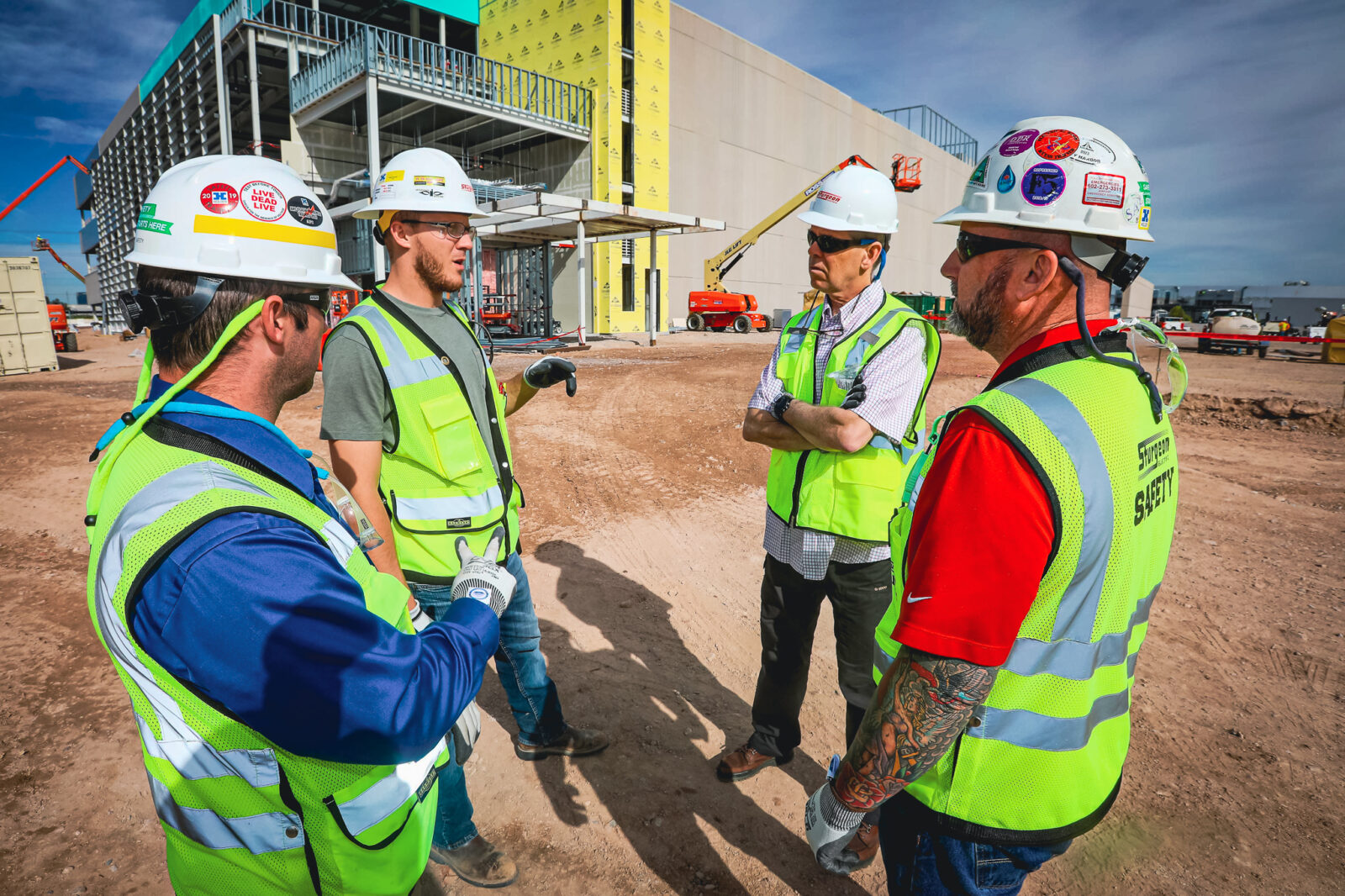
The company also developed a robust observation program where
the safety professionals visit jobs sites to see how work is
being performed. Then they discuss their observations to
identify trends, areas for improvement, and training gaps to
address through various safety training programs, including Back
to Basics.
Developing a program that suits a wide variety of training needs
for crews performing a range of services from transmission and
distribution, to commercial and industrial, led to a robust
program, with various sub-topics. And Foster said deciding which
topics to include in the program wasn’t always easy.
“We sometimes have to stop and say ‘wait, this is Back to
Basics. This is refresher training for people who have been
trained, to refresh their knowledge and skills because as humans
we have a lot on our plates,’” Foster explained.
The format has also changed to better fit the needs of
operations teams with a menu-style customization. While some
core topics are mandatory, local leadership can also choose from
a list of available training courses to strategically select
topics that best fit needs they have identified through the
course of their work.
“The field employees stay engaged, they want to hear more,”
Miller said of his employees’ experience with Back to Basics.
“At the end of every training they are excited and want to know
what we will cover next.”
The Importance of Leadership Involvement
MYR Group and its subsidiaries are committed to remaining
industry safety leaders and this success requires commitment and
continued support from all levels within the organization –
especially all levels of leadership.
From top to bottom, the program has continued support from MYR
Group leaders.
Leadership involvement is just as vital to an effective
refresher training program like Back to Basics as providing
relevant, engaging content.
“It simply means more to field crews when a district manager or
operations manager is there to help introduce the training,
present the content or to answer questions,” Foster explained.
Miller agreed saying, “I think it’s important for me to get in
front of the field crews for Back to Basics and let them know
this information is important to our success, not just
short-term but long-term, and in making sure they get to go home
every evening to their families.”
Miller manages a team in Pasadena, Texas with about 260
individuals working in the field providing several scopes of
work. The size of that team makes it difficult for everyone to
stop work at the same time for a Back to Basics training day, so
they usually meet in multiple, smaller training groups, but
Miller still tries to ensure he is there for each and every one
of his employees’ Back to Basics training.
All of this ultimately benefits the customers we serve by
providing them with a qualified, well-trained workforce focused
on performing their work safely.
“I think our customers see that when it comes to safety, we have
a structure. We’re not just checking a box and saying we’ve done
it. We are continuously focusing on the basics of safety, and
when a gap or trend is identified, we go back to refresher
training again. And we have an avenue to address it across the
entire organization,” Gessman said. “Generally, a safe job is a
productive job and a quality job. All around, projects are
better when they are done safely.”