March 31, 2025
A Day in the Life: General Foreman Robert Blaney
When talking with Robert Blaney, it quickly becomes clear he
loves what he does. In college, the Great Southwestern (GSWC)
general foreman studied psychology and medicine before
renouncing that career path and seeking one he had more interest
in and could get involved with quickly. This brought him to
Northwest Linemen College in his hometown in California. After
graduating, Robert – or “Blaney” as he’s known in the field –
travelled around performing transmission work and gaining
experience in a variety of states before landing at Great
Southwestern, where he quickly joined its apprenticeship
program.
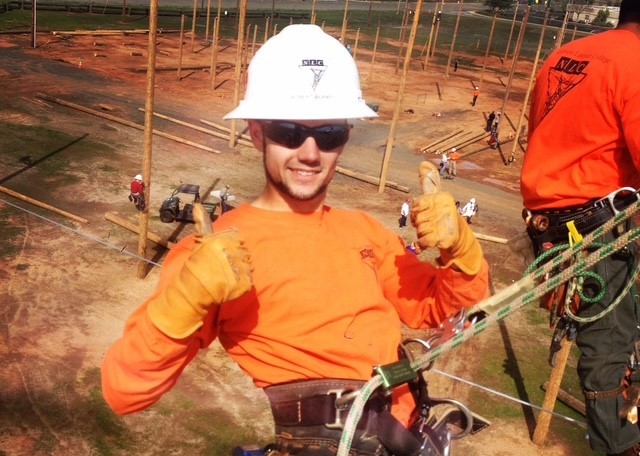
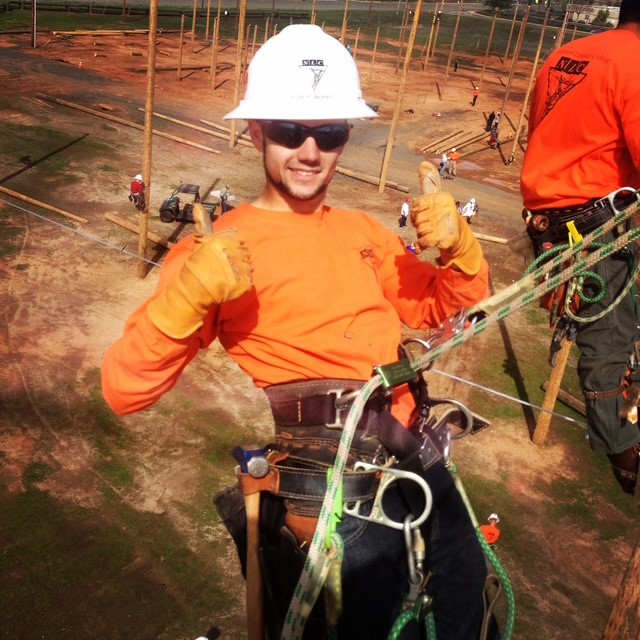
Blaney attended line school at his hometown in California
before joining GSWC.
“My whole goal was to get into the trade, keep travelling around
while I worked as an apprentice, become a journeyman lineworker,
and finally plant some roots somewhere.” he said.
And that’s exactly what he did. Read on to learn more about what
brought Robert to his role as general foreman and chairman of
the Safety Committee, the values he brings to the job site as a
leader, and his experience performing live-line barehand work.
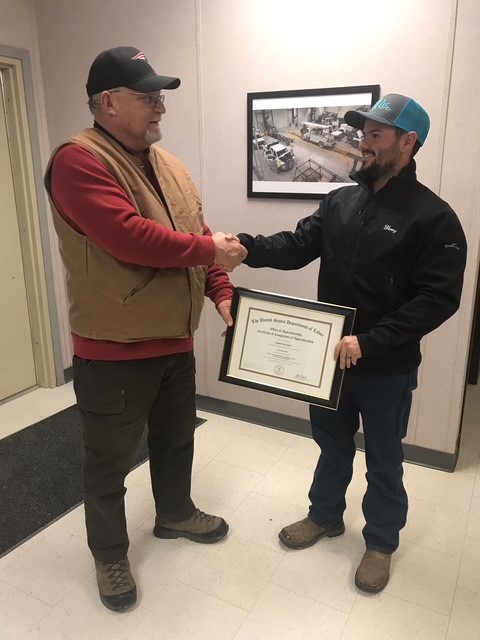
Blaney graduated from GSCW’s apprenticeship program.
Q: Describe your experience in GSWC’s apprenticeship
program?
The apprenticeship program rounded out my skills because there
were areas in which I wasn’t very knowledgeable since I
worked on transmission lines my whole career up until that
point. Learning underground distribution and substation work,
even though I’m not going to do it every day, still gives
me a sense of what needs to be done if I find myself in that
situation. The program made me better equipped for any situation
that could arise in the industry. And that’s always what
I’ve wanted – not just be good at one thing but be good at
as many things as I can.
Q: How did your career grow after graduating from the
apprenticeship program?
I became a journeyman lineworker, and shortly after, Great
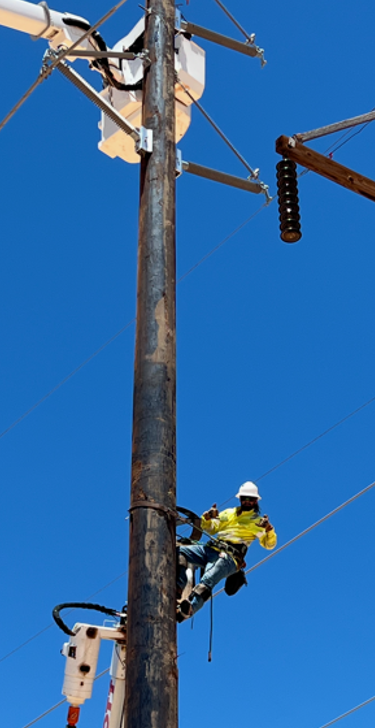
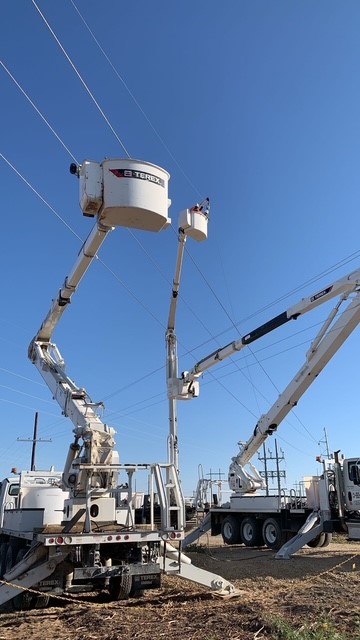
Southwestern started doing the live-line barehand work that we
do now. I was part of the first barehand crew the company had in
Texas, and we’ve been doing it since 2019, so I ended up
becoming knowledgeable about that aspect of the trade. From
there, I became a foreman for two years and was promoted to my
current role as general foreman about three months ago.
Q: What was it like to be a part of GSWC’s first live-line
barehand crew?
I’d heard of barehand work before and I’d seen it
done maybe once in the four or five years I’d worked
before then. Barehand work was always kind of a big deal, so
getting the opportunity to learn and perform that type of work
was a cool experience, and it has treated me well by helping me
develop a new skill set and advance my career.
It was a lot like the apprenticeship because there was class
work to learn the different steps and precautions you take when
dealing with energized transmission lines. After classroom
learning, we trained in the yard doing simulated energized work.
This is before MYR Group formed the Live Line Academy, which is
now also located in Alvarado, Texas.
Q: What’s the benefit of being trained in live-line barehand
work?
Energized work is just a good skill for lineworkers to
learn, and it’s definitely good for rounding out
your skills.
Robert Blaney
I feel like the industry is turning towards energized work. If
utilities don’t have to take outages, it benefits
everyone. The longer you can keep the line energized, the more
profitable it’s going to be. Energized work is just a good
skill for lineworkers to learn, and it’s definitely good
for rounding out your skills. Barehand work may have been newer
when I first entered the industry, but now I see and hear about
it a lot more. I think that it’s becoming a more prevalent
way of working on transmission lines for certain customers.
Q: Describe your role as a chairman of GSWC’s Safety
Committee and explain the group’s purpose?
The Safety Committee is a collection of field workers along with
some office employees that come together to see if there are any
changes we want to see in our safety culture. We’re kind
of like a liaison with leadership regarding safety in the field.
Our goal is to make everything as safe as possible for everyone
on a job site. We like involving a lot of perspectives from the
field because they’re out there day to day in the nitty
gritty of it all. If they see things that they think could be
improved, that’s what we all come together for.
Safety is about practicing what we preach.
Robert Blaney, Chairman of the GSWC Safety Committee
For example, we have the short service employee (SSE) program
for new employees, who wore green hard hats. Last year we
discovered that green hard hats are extremely hot for the crews
in the summertime. We got a laser thermometer and discovered
that the temperature on the inside of a green hard hat compared
to a lighter colored hard hat is about 30 degrees hotter.
I then put together a presentation for our leadership team. The
initiative led to our company changing the green hard hats to a
lighter yellow. Now we still have the benefits of the SSE
program for the identification, but not at the detriment of
potentially overheating the crews.
Q: How do you make sure safety is at the core of everything
that your team does?
Safety is about practicing what we preach. We can’t tell
everyone that we need them to be safe but then take shortcuts
ourselves or allow them to happen. It’s about making sure
that we identify and address instances that need correction and
not let things slide. Safety is also about mitigating as much as
you can before anything even happens and making sure your
controls are in place. It’s important to teach everyone this
attitude toward safety and let people know that safety is
paramount to everything we do.